
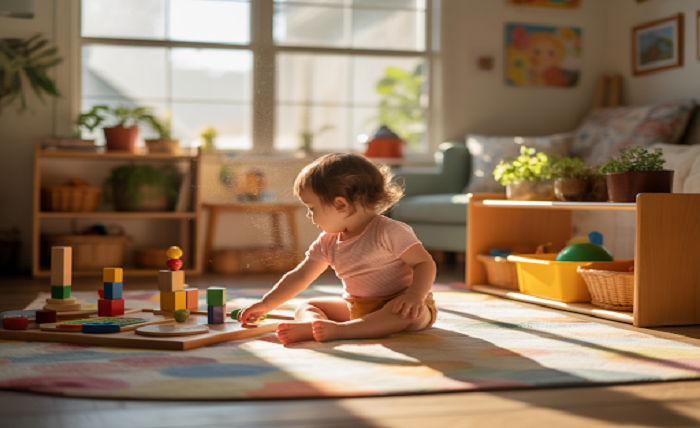
The earliest years of life are filled with rapid growth, bold exploration, and the formation of foundational habits that influence how a child learns. While every child develops at a unique pace, research consistently shows that the environment surrounding a learner plays a defining role in how curiosity, confidence, and cognitive abilities unfold. From home routines to structured learning spaces, the worlds we build for young children directly influence the worlds they will one day build for others.
The Science of Early Learning Environments
Children are not passive recipients of information; they actively test, question, experiment, and refine their understanding of the world. Neuroscientists have found that early experiences strengthen neural pathways and support the development of memory, language, and emotional regulation. However, not all environments encourage this natural drive to explore. Spaces that provide sensory richness, emotional safety, and opportunities for guided discovery help children reach their fullest potential. These conditions are often what differentiate vibrant early-education centers from more traditional, passive learning settings.
Where Structure Meets Exploration
This is where intentional learning environments become especially meaningful. Parents often compare programs based on curriculum alone, but what truly shapes a child’s readiness for school is the daily blend of routine, support, and hands-on discovery. In communities across the country, including centers such as Free Pike preschool, these principles come to life through purposeful room design, trained educators, and activities that nurture curiosity without overwhelming young learners. Structure offers safety, while exploration fuels imagination—a balance that influences academic and social outcomes long before elementary school begins.
Designing Spaces That Spark Curiosity
A well-designed learning environment is a silent teacher. It communicates what is possible, what is encouraged, and what is valued. Thoughtful early-education settings use layout and materials to guide children toward discovery. Low shelves invite independent choice, natural materials encourage sensory learning, and open floor plans facilitate group collaboration. Even lighting, color palettes, and the placement of windows can influence attention and calmness.
But the physical environment is only one part of the equation. When teachers embed curiosity-driven questions into activities—such as “What do you think will happen if…?” or “Why do you think that changed?”—children learn to approach challenges with confidence. The aim is not to produce the “right answer” but to cultivate a habit of inquiry.
The Role of Routine in Early Cognitive Growth
Curiosity thrives when children feel secure. A predictable daily rhythm helps young learners develop trust in their environment, which in turn allows them to focus on exploration. Many high-quality childcare centers intentionally craft their routines to balance rest, play, structured learning, and outdoor time. These schedules nurture the development of executive function skills—planning, flexibility, and self-control—long before a child consciously recognizes them.
Importantly, routines also help children understand transitions. The shift from playtime to group learning, or from outdoor exploration to quiet reading, becomes a learning experience itself. By building these patterns early, children develop resilience and adaptability that benefit them for years.
Social Interaction as a Learning Catalyst
Early education is not solely about academic readiness. Children build much of their cognitive and emotional framework by interacting with others. Through play, collaboration, and shared problem-solving, children learn empathy, communication, and conflict resolution. These moments—small but numerous—shape their worldview and prepare them for the social demands of school and life.
Educators act as guides during these interactions. They model language that helps children express feelings, choose solutions, and practice patience. A supportive social environment becomes a training ground for emotional intelligence, which is known to correlate strongly with long-term success.
The Influence of Community-Centered Learning
One of the strongest predictors of early learning outcomes is the sense of connection between families, educators, and the broader community. When children see their school as an extension of their home environment—safe, welcoming, and consistent—they gain confidence to explore and take intellectual risks. Community-centered early-education programs often include family events, progress updates, and shared experiences that reinforce this connection.
Parents become collaborators in learning, educators gain deeper insights into each child’s needs, and children benefit from a unified support network. When curiosity is reinforced at home and at school, learning becomes a natural and joyful part of daily life.
Why Curiosity Matters More Than Ever
In a world shaped by rapid technological change and evolving global challenges, the ability to think creatively and solve problems is becoming a defining skill. Curiosity fuels this ability. Children who grow up questioning, exploring, and experimenting develop the cognitive flexibility required to adapt to new information. They become adults who are not afraid to ask difficult questions, embrace uncertainty, and continue learning throughout their lives.
Early environments are where this mindset is first cultivated. Whether through imaginative play, science experiments, artistic creation, or storytelling, curiosity-rich experiences prepare children for a lifetime of intellectual engagement.
A Foundation That Shapes the Future
The environments surrounding young learners today become the foundations upon which tomorrow’s thinkers, creators, and leaders stand. When children are immersed in settings that nurture exploration, emotional safety, and social connection, their natural drive to learn flourishes. Families, educators, and communities all play essential roles in shaping these environments. By understanding the impact of early learning spaces, we gain insight into how curiosity takes root—and how it can be strengthened for generations to come.