Have you ever heard someone use the word “heffer” in conversation and wondered what it really means? Maybe you’ve seen it written in text messages, heard it in movies, or even been called one yourself.
The truth is, this seemingly simple word carries much more weight than you might expect – and understanding its meaning, origin, and usage can help you navigate conversations more confidently while avoiding potential misunderstandings.
Words have power, and “heffer” is no exception.
Whether it’s used innocently or with harmful intent, knowing the full context behind this term can protect you from accidentally offending someone or help you recognize when language is being used to hurt others.
Let’s dive deep into everything you need to know about this controversial word.
What Does “Heffer” Actually Mean?
The word “heffer” (sometimes spelled “heffa” in slang contexts) has evolved significantly from its original meaning. Today, it’s primarily used as offensive slang to describe a woman who is perceived as overweight or obese, particularly someone with a BMI over 30.
This usage transforms an innocent animal term into a form of body shaming and social discrimination.
The literal meaning of heffer comes from “heifer” – a young female cow that hasn’t yet had a calf.
However, when people use “heffer” to describe women, they’re creating a deliberate comparison between women and cattle, which is both derogatory and objectifying.
This animal metaphor reduces women to their physical appearance and perpetuates harmful gender biases about body image and social worth.
It’s important to understand that while the word might seem playful or harmless to some, it often reinforces negative stereotypes about women’s bodies and contributes to weight discrimination.
The Historical Origin of “Heffer”
Understanding where “heffer” comes from helps explain how an innocent farm term became a hurtful insult.
The word traces back to Old English “heahfore,” which simply meant a young female cow. Over centuries, this evolved into the modern English word “heifer.”
The transformation from agricultural terminology to offensive slang reflects broader patterns in language evolution. Throughout history, animal comparisons have been used to describe human characteristics, often in ways that demean or objectify people.
The shift from “heifer” to “heffer” as an insult demonstrates how cultural attitudes toward women’s bodies have influenced everyday language.
This historical context shows that the offensive usage of “heffer” isn’t traditional or ancient – it’s a relatively recent development that reflects modern body image stereotypes and social judgment about women’s appearance.
Real-World Examples of “Heffer” Usage
To better understand how “heffer” appears in different contexts, let’s examine various scenarios where you might encounter this word:
Offensive and Hurtful Usage
- Workplace harassment: “Did you see that heffer in accounting? She needs to lay off the donuts.”
- Social media bullying: Comments like “What a heffer” on someone’s photos
- Relationship conflicts: Using “heffer” during arguments to attack someone’s appearance
- School bullying: Teenagers calling classmates “heffer” to shame their body type
Pop Culture and Media References
- Television shows: Characters like the cow from Nickelodeon’s “Rocko’s Modern Life” named Heffer Wolfe
- Music lyrics: Some rap and hip-hop songs reference “heffa” as slang
- Comedy routines: Comedians sometimes use the term, though this doesn’t make it less harmful
- Social media trends: Memes and viral content that normalize the word’s usage
Misguided “Playful” Usage
- Friends joking: “Come on, heffer, let’s go eat” (intended as friendly but still problematic)
- Family nicknames: Some families use it thinking it’s harmless teasing
- Self-deprecating humor: People calling themselves “heffer” to deflect criticism
- Casual conversation: Using it without realizing the negative impact on others
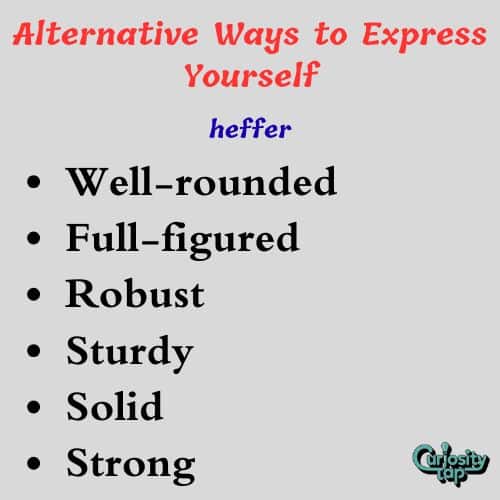
Alternative Ways to Express Yourself
Instead of using “heffer” or similar derogatory language, consider these more respectful alternatives when describing people:
Positive Physical Descriptions:
- Well-rounded
- Full-figured
- Robust
- Sturdy
- Solid
- Strong
Neutral Terms:
- Big-boned
- Heavyset
- Stocky
- Broad-shouldered
- Well-built
- Ample
Focus on Character Instead:
- Kind-hearted
- Confident
- Cheerful
- Intelligent
- Funny
- Talented
The Social Impact of Using “Heffer”
When someone uses “heffer” to describe others, it contributes to a culture of body shaming and social discrimination.
This type of language affects not just the target but everyone who hears it, reinforcing harmful beauty standards and physical appearance expectations.
Research shows that weight-based discrimination can lead to serious mental health issues, including depression, anxiety, and eating disorders.
Using words like “heffer” normalizes this discrimination and makes it seem acceptable to judge people based on their body size or BMI.
The cultural impact extends beyond individual interactions. When derogatory language becomes common in our vocabulary, it shapes how society views and treats people who don’t fit narrow beauty standards. This creates a cycle where body positivity becomes harder to achieve and maintain.
Comparison Table: Heffer vs. Respectful Language
| Context | Using “Heffer” | Better Alternative |
| Describing appearance | “She’s such a heffer” | “She has a lovely personality” |
| Friendly teasing | “Hey heffer, what’s up?” | “Hey girl, what’s up?” |
| Expressing frustration | “That heffer cut me off!” | “That driver cut me off!” |
| Social media comments | “What a heffer in that dress” | Simply don’t comment on appearance |
| Workplace conversation | “The heffer from HR called” | “Sarah from HR called” |
Why We Should Avoid Using “Heffer”
Understanding the negative meanings of heffer helps us make better choices about our language. Here’s why avoiding this word matters:
It perpetuates harmful stereotypes about women’s bodies and worth. When we use animal metaphors to describe people, we dehumanize them and reduce their value to physical characteristics.
It contributes to body shaming culture that affects people of all sizes. Even if someone appears confident, hearing offensive slang about body size can trigger insecurities and self-doubt.
It normalizes discrimination based on physical appearance. When we casually use words like “heffer,” we make it seem acceptable to judge and mock people for their bodies.
It reflects poorly on the speaker. Using derogatory language shows a lack of empathy and respect for others, which can damage relationships and professional reputation.
Also Read: Goomar – Its Meaning, Origin And Usage
Expert Advice: What to Do and What to Avoid
What You Should Do:
- Choose kindness in your language choices
- Focus on character rather than appearance when describing people
- Call out body shaming when you witness it
- Practice body positivity in your daily conversations
- Use people’s names instead of appearance-based nicknames
What You Should Avoid:
- Using “heffer” or similar animal metaphors for people
- Making assumptions about someone’s health based on appearance
- Participating in body shaming conversations
- Defending offensive language as “just joking”
- Normalizing discrimination through casual word choices
Bonus Tip: The Power of Mindful Language
Here’s something most people don’t realize: changing your vocabulary can actually change your mindset. When you consciously avoid body-shaming language like “heffer” and replace it with more respectful alternatives, you start to see people differently.
This shift in language creates a ripple effect. Others notice your positive communication style and often follow suit. You become a catalyst for more inclusive conversations and help create environments where people feel valued for who they are, not how they look.
Try this challenge: For one week, pay attention to every word you use to describe people. Notice when you’re tempted to comment on appearance and redirect yourself to character traits or achievements instead. This simple practice can transform not just your vocabulary but your entire perspective on human worth and dignity.
Frequently Asked Questions
What is the difference between “heffer” and “heifer”?
“Heifer” is the correct spelling for a young female cow, while “heffer” is a slang variation often used as an offensive term to describe women. The literal meaning refers to cattle, but the slang usage has become a form of body shaming and should be avoided in respectful conversation.
Is calling someone “heffer” always offensive?
While some people might use “heffer” thinking it’s playful, it’s generally considered offensive slang because it compares women to cattle and focuses on body size in a derogatory way. Even if intended as humor, it can perpetuate harmful stereotypes and contribute to weight discrimination.
How should I respond if someone calls me “heffer”?
If someone uses “heffer” to describe you, it’s important to set boundaries. You can calmly explain that the term is hurtful and ask them to use your name instead. Remember that body shaming language says more about the speaker’s character than about you, and you deserve to be treated with respect regardless of your appearance.
What are better ways to compliment someone’s appearance?
Instead of focusing on body size or using animal metaphors, try complimenting someone’s style, confidence, or energy. Phrases like “You look radiant,” “I love your outfit,” or “You have such a warm smile” are much more positive and respectful than appearance-based comparisons that might make someone uncomfortable.
Conclusion
Words are like seeds – they grow into the reality we create around us. While “heffer“ might seem like just another slang term, it carries the weight of centuries of body shaming and discrimination that can deeply wound the people we encounter.
The beauty of language lies not in its power to tear down, but in its ability to build up, connect, and celebrate the incredible diversity of human experience.
Every time you choose kindness over cruelty, respect over ridicule, and empathy over judgment, you’re not just changing a conversation – you’re changing the world, one word at a time.
So the next time you’re tempted to use “heffer” or any derogatory language, remember that your words have the power to either dim someone’s light or help them shine brighter. Choose to be the person who helps others sparkle.
Read more knowledgeable blogs on Curiosity Tap